
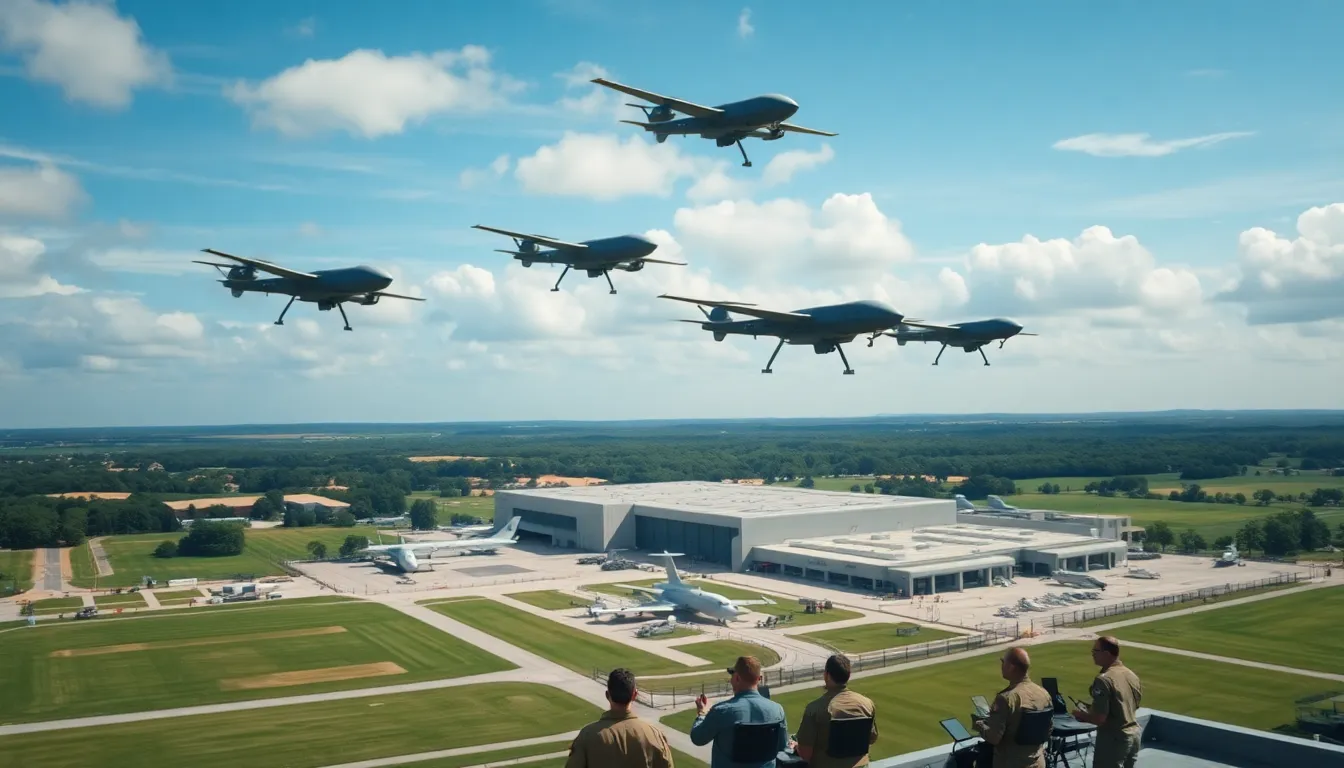
When you think of Langley Air Force Base, what comes to mind? Maybe flying jets or a bunch of serious-looking personnel. But wait – drones are taking to the skies over this iconic base, and they’re doing more than just buzzing around for fun. In this text, we’re diving deep into the world of drones over Langley AFB, exploring their roles, implications, and what the future holds. Buckle up, because this isn’t your typical drone hobbyist discussion – we’re talking high-tech military machinery that’s shaping the future of defense.
Overview of Langley Air Force Base
History and Importance
Established in 1916, Langley AFB is one of the oldest military installations in the United States, serving as a pivotal hub for airpower. Its strategic location in Virginia makes it a key player in America’s air operations. First used for training pilots during World War I, Langley holds a rich history steeped in military excellence. Over the decades, it has evolved significantly, adapting to new technologies and changing military strategies. The base has not only developed into a center for fighter jet training but has also taken on vital intelligence missions that incorporate drone operations to enhance situational awareness.
Current Operations and Mission
Today, Langley AFB is home to the 480th Intelligence, Surveillance, and Reconnaissance Wing, which focuses on providing critical data and analysis for military operations. The missions here are multi-faceted and involve integrating advanced technologies to meet modern challenges. Importantly, drones have become an essential component of this mission. These unmanned aerial vehicles (UAVs) gather intelligence, conduct surveillance, and even target enemy assets with pinpoint accuracy, making Langley a vital node in the U.S. military’s operational capabilities.
The Role of Drones in Military Operations
Types of Drones Used
In military operations, various types of drones are deployed, each designed for specific roles. From reconnaissance UAVs like the RQ-11 Raven to the combat-ready MQ-9 Reaper, the versatility of these machines is unmatched. They excel at providing real-time intelligence to commanders while keeping pilots safe from danger. The different capabilities of each type allow for tailored missions, whether aerial reconnaissance or precision strikes against specific targets. As new models roll off the production line, the scope and effectiveness of these drones continue to expand.
Technological Advancements in Drone Warfare
The advancements in drone technology over the past two decades are impressive. Drones are now outfitted with advanced sensors, enhanced fly-by-wire systems, and even artificial intelligence capabilities. These features allow for autonomous operations, meaning they can complete missions with minimal human intervention. Innovations in communication technology enable better real-time data sharing and coordination with other military assets, making drone operations a cornerstone of modern warfare.
Implications of Drones Over Langley AFB
Impact on Local Community
While drones can enhance military operations, their presence over Langley AFB doesn’t come without consequences. Locally, residents have expressed mixed feelings. Some see the benefits of increased security and national defense, while others worry about noise, potential accidents, and the overall impact on daily life. The transparency of military operations remains a concern, with community members often seeking clarity about drone flights and the technology involved. Engagement between the military and local communities will be essential in addressing these issues and fostering understanding.
Safety and Privacy Concerns
Safety is a paramount issue for both military and civilian operations alike. With drones soaring overhead, concerns about collisions or accidents have arisen. Also, the capacity of drones to collect data raises privacy questions. How much are they surveilling? Local communities often demand assurance that their privacy won’t be unwittingly compromised. Balancing operational effectiveness with safety and privacy standards remains a delicate challenge for military officials.
Future of Drone Operations at Langley AFB
Potential Developments in Drone Technology
The future of drone operations at Langley AFB seems bright, with ongoing research and development promising exciting advancements. Emerging technologies such as swarming capabilities, where multiple drones operate collaboratively, and improved AI-driven decision-making processes could revolutionize military applications. Besides, developments in drone durability and stealth technology may enhance the effectiveness of missions while minimizing risk. The military is also exploring hybrid drones that can seamlessly transition between aerial and ground operations, expanding the tactical options available.
Strategic Importance in National Defense
As global tensions evolve, the role of drones in national defense will likely expand. Langley AFB stands at the forefront of this evolution, playing a crucial role in the integration of these technologies into defense strategies. By enhancing ISR capabilities and providing real-time intelligence to commanders, drones stationed over Langley will continue to underpin the effectiveness of U.S. military operations, ensuring the country remains responsive in an increasingly complex security environment.